Federal Budget 2024-25
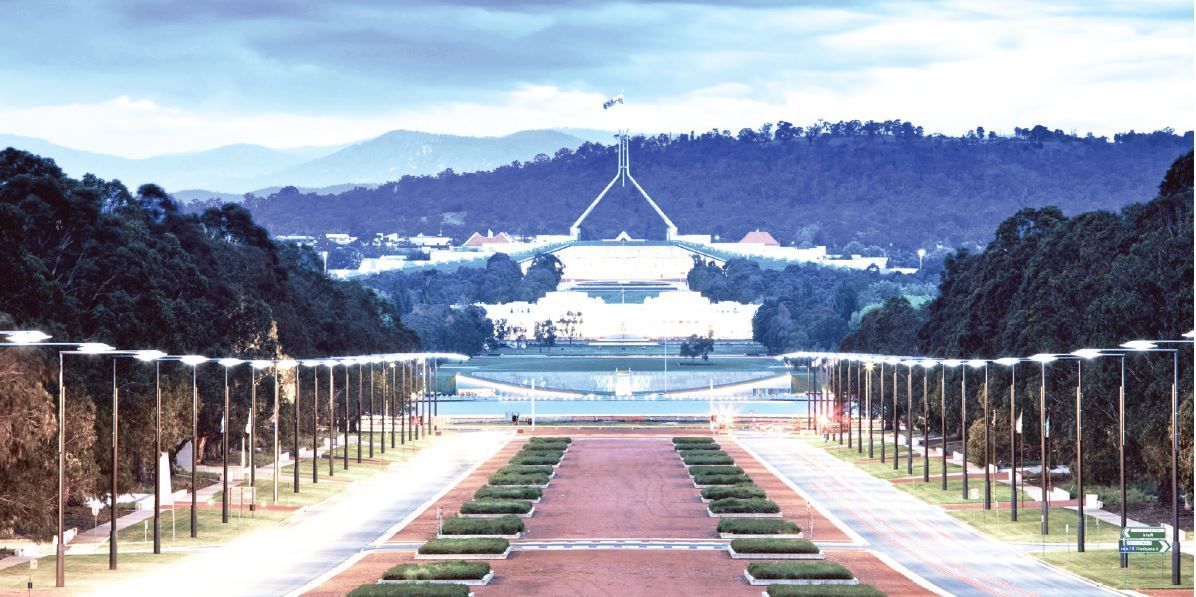
The Federal Budget for 2024-25 was handed down on Tuesday 14 May 2024. It contains a range of proposed measures across the areas of income tax, superannuation, tax administration and related cost of living measures.
Some of these may affect you directly or indirectly. We have provided a summary of these measures and what they may mean for you.
Please feel free to contact this office if you have any queries about them or how they may impact you in your circumstances.
Taxation Measures
Instant asset write-off threshold of $20,000 extended
The $20,000 instant asset write-off for small businesses with an aggregated annual turnover of less than $10 million has been extended to expenditure incurred up to 30 June 2025. Without this extension, the threshold would have dropped back to $1,000 as from 1 July 2024. This measure now provides certainty to the issue.
What this means:
Given the extension, there is no longer the same urgency in having depreciating assets used or installed ready for use by 30 June 2024 as items costing less than $20,000 acquired over the following 12 months will still be eligible for an immediate write-off for small businesses using the simplified depreciation rules. However, it might still make sense for unincorporated small businesses to acquire depreciating assets costing less than $20,000 before 1 July 2024 as the Stage 3 tax cuts will make the immediate deduction less valuable in 2024-25 than in 2023- 24 (subject to cashflow considerations).
CGT changes for foreign residents
Changes will be made to the way foreign residents are subject to CGT in Australia by broadening the types of Australian assets that foreign residents will be taxed on in Australia and in tightening the rules that make a foreign resident liable to CGT in respect of interests in “land rich” companies or trusts. In addition, the measures will require foreign residents disposing of shares and other membership interests exceeding $20m in value to notify the ATO, prior to the transaction being executed.
What this means:
Whether these changes will apply to investment shares held on the ASX by foreign investors is not clear. In any event, the proposed measures will only apply to sales occurring from 1 July 2025 – which will, depending on the final form of the legislation, give time to consider any necessary strategies.
No extensions for training and energy efficiency boosts
The additional 20% boosts for expenditure on employee training and energy efficient assets for small businesses with an annual aggregated turnover of less than $50 million are scheduled to expire on 30 June 2024 and these incentives have not been extended in this year’s Budget.
What this means:
There are only about six weeks left to benefit from these incentives, and it may be worthwhile brining forward expenditure you were otherwise planning to incur later in the year, cashflows permitting.
ATO discretion not to offset old tax debts on hold
Last year the ATO began to offset some older tax debts that had been put on hold prior to January 2017 against current BAS refunds. While in some cases the revived tax debts were relatively small, the ATO was not always able to explain what the debts represented. The ATO suspended the practice pending clarification of what its powers were not to collect these older amounts. The Government will now give the ATO the explicit power not to offset debts put on hold before 1 January 2017.
What this means:
If you see any unexplained offsets against a current BAS refund, you should contact us in case we can have the ATO remove the offset.
Refund frauds and likely delays in processing BAS refunds
The Government has now addressed this issue in the Budget by extending the period within which the ATO has to notify a taxpayer that it intends to retain a BAS refund for further investigation from 14 days to 30 days. The measure takes effect in the first income year commencing after enactment of the relevant law (which could be as soon as next month if the government is quick off the mark with its legislation).
What this means:
If necessary, you may need to be prepared to engage with the ATO about what is behind your BAS refund – eg, you are an exporter or you have recently purchased a significant item of equipment.
Student loans repayments to be reduced
The Budget proposes to introduce measures so that indexation of the Higher Education Loan Program (HELP) debt will be limited to the lower of either the Consumer Price Index or the Wage Price Index - with effect retrospectively from 1 June 2023.
What this means:
The Budget papers also said that this will also apply to “other student loans”. Presumably, this measure will help lower the cost of living burden on younger Australians – “and for this relief, much thanks!” (Shakespeare, Hamlet)
Instant asset write-off threshold of $20,000 extended to 30 June 2025
As widely expected, the $20,000 instant asset write- off for small businesses with an aggregated annual turnover of less than $10 million has been extended to expenditure incurred up to 30 June 2025. Without this extension, the threshold would have dropped back to $1,000 as from 1 July 2024.
Senate amendments boosting the instant asset write-off regime for 2023-24 to $30,000 for businesses with an annual turnover of less than $50 million are not likely to be accepted by the government in the House of Representatives. It is expected that the measure will eventually be passed in the form originally proposed in last year’s Budget – ie, a $20,000 threshold for entities with an aggregated annual turnover less than $10 million.
What this means:
Given the extension, there is no longer the same urgency in having depreciating assets used or installed ready for use by 30 June 2024 as items costing less than $20,000 acquired over the following 12 months will still be eligible for an immediate write-off for small businesses using the simplified depreciation rules. However, it might still make sense for unincorporated small businesses to acquire depreciating assets costing less than $20,000 before 1 July 2024 as the Stage 3 tax cuts will make the immediate deduction less valuable in 2024-25 than in 2023-24 (subject to cashflow considerations).
No extensions for training and energy efficiency boosts
The additional 20% boosts for expenditure on employee training and energy efficient assets for small businesses with an annual aggregated turnover of less than $50 million are scheduled to expire on 30 June 2024 and these incentives have not been extended in this year’s Budget.
What this means:
There are only about six weeks left to benefit from these incentives, and it may be worthwhile brining forward expenditure you were otherwise planning to incur later in the year, cashflows permitting.
ATO discretion not to offset old tax debts on hold
Last year the ATO began to offset some older tax debts that had been put on hold prior to January 2017 against current BAS refunds. While in some cases the revived tax debts were relatively small, the ATO was not always able to explain what the debts represented.
Following complaints by tax practitioners and others, the ATO suspended the practice pending clarification of what its powers were not to collect these older amounts. The government has now signaled it will give the ATO the explicit power not to offset debts put on hold before 1 January 2017.
What this means:
If you see any unexplained offsets against a current BAS refund, you should contact us in case we can have the ATO remove the offset.
Refund frauds and likely delays in processing BAS refunds
The ATO has come under criticism recently in relation to more than a few cases where people have successfully made claims for fraudulent GST refunds, sometimes for over a period of time and for large amounts. In responding to this criticism, the ATO had pointed out that its processes have been more geared to getting refunds out to the vast majority of honest taxpayers promptly and worrying about cases of fraud after the event. Given the scale of the refund frauds detected, however, the ATO has suggested that it may need to consider taking more time to process refunds so that they can prevent fraudulent claims.
The government has addressed this issue in the Budget by extending the period within which the ATO has to notify a taxpayer that it intends to retain a BAS refund for further investigation from 14 days to 30 days. The measure takes effect in the first income year commencing after enactment of the relevant law, which could be as soon as next month if the government is quick off the mark with its legislation.
What this means:
If necessary, you may need to be prepared to engage with the ATO about what is behind your BAS refund – eg, you are an exporter or you have recently purchased a significant item of equipment.
Superannuation Measures
Super to be paid on paid parental leave
Super guarantee contributions will be paid on government-funded paid parental leave (PPL) for parents of babies born or adopted on or after 1 July 2025. Eligible parents will receive an additional 12% SG payment on their PPL payments, as a contribution to their superannuation fund. Payments will be made annually to individuals’ superannuation funds from 1 July 2026.
What this means:
To get government-funded PPL, you will need to meet certain criteria such as be caring for your newborn or adopted child, meet an income test, work test and other residency rules.
Social security, cost of living and other measures
Social security deeming rates frozen
Social security deeming rates will be frozen at their current levels for a further 12 months until 30 June 2025. The lower deeming rate will remain at 0.25% and the upper deeming rate will remain at 2.25%.
Flexibility for carer payment recipients
From 20 March 2025, the existing 25 hours per week participation limit for carer payment recipients will be amended to 100 hours over 4 weeks. Also, the participation limit will only apply to employment and will no longer include study, volunteering activities and travel time.
Eligibility for higher rate of Jobseeker payment extended
Eligibility for the higher rate of Jobseeker payment will be extended to single recipients with a partial capacity to work of zero to 14 hours per week from 20 September 2024.
Commonwealth Rent Assistance increase
The maximum rates of the Commonwealth Rent Assistance (CRA) will increase by 10% from 20 September 2024 to help address rental affordability challenges for recipients.
Lower foreign investment fee for build- to-rent properties
Foreign investors will be allowed to purchase established build-to-rent properties with a lower foreign investment fee. The lower foreign investment fee will be conditional on the property continuing to be operated as a build-to-rent development.
Previous Blog Posts: